
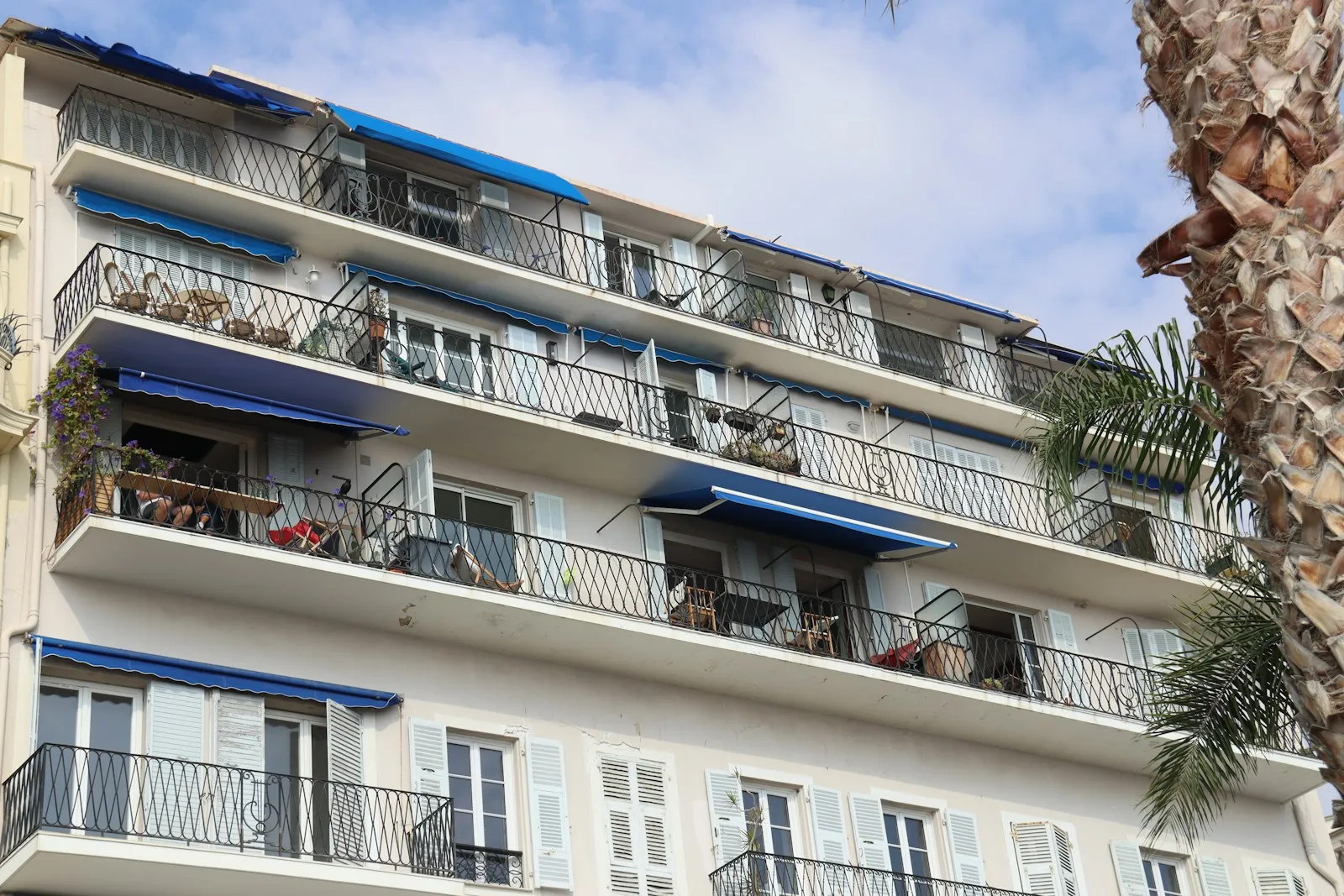
Buying a property in Nice and renting it out sounds straightforward. In practice, the regulatory landscape has shifted considerably. The direction of travel is toward tighter controls, not looser ones, so here’s what you need to understand before you commit.
Short-term rentals: the rules have changed
The 2024 French short-term rental law (loi Le Meur, n°2024-1039, November 2024) changed the framework for furnished tourist lets across France, and Nice has moved quickly to implement the toughest version allowed.
Key changes from 1 January 2026:
- Primary residences can now only be rented short-term for 90 days per year (down from 120).
- Any short-term rental of a secondary residence requires a changement d’usage authorization from the Métropole Nice Côte d’Azur.
- Nice has introduced a quota system: only 671 authorizations are available annually, distributed by neighbourhood.
- New authorizations are valid for 3 years, non-renewable (the previous system allowed annual renewals up to 6 years).
- All short-term rental owners must register via a national platform and display a registration number on all listings (deadline: 20 May 2026).
Note: As of early 2026, the quota system is subject to a legal challenge before the Conseil d’État. The filing window was suspended pending the court’s ruling, so check nicecotedazur.org for the current status before applying.
The changement d’usage
This is the administrative classification that allows a residential property to be used commercially as a meublé de tourisme. Without it, renting a secondary residence short-term is illegal.
Under the 2024 law, obtaining a permanent changement d’usage now triggers a compensation requirement: you must convert an equivalent area of commercial or office space into residential use, which in central Nice is expensive and often impractical.
A simpler route for secondary residence owners: the location mixte. This lets you combine a 9-month furnished student let (September to June) with 3 months of tourist rental in summer, without the compensation requirement.
Co-ownership rules and building bylaws for short-term lets
Even if you obtain a changement d’usage, your building’s co-ownership rules may block short-term lets. Since November 2024, existing co-ownerships can amend their bylaws to prohibit tourist rentals with a two-thirds majority vote (previously required unanimity). More buildings are likely to go this way as the rules continue to tighten.
Before buying, check the règlement de copropriété carefully and ask whether a vote on short-term rentals has been held or is planned.
Tax obligations for short-term lets (LMNP)
Most individual owners renting furnished property fall under the LMNP (Loueur Meublé Non Professionnel) regime. You qualify if your rental income is below €23,000 per year or below your other household income.
The 2024 law also cut the tax allowances:
| Type of rental | Income threshold (micro-BIC) | Allowance |
|---|---|---|
| Unclassified meublé de tourisme | €15,000 | 30% |
| Classified meublé de tourisme | €77,700 | 50% |
Above those thresholds, you must file under the régime réel (actual expenses plus depreciation). You’ll also need a SIRET number from the INPI business register, and you’ll owe CFE (business property tax) annually once your income exceeds €5,000.
Tourist tax (taxe de séjour) for short-term rentals in Nice
Nice charges a taxe de séjour on all short-term stays. Unclassified properties pay 5% of the nightly rate per person, capped at €4.00 per person per night. Classified properties pay a fixed rate by star rating (€1.07 to €4.02 per person per night), plus a 34% departmental surcharge.
Platforms like Airbnb and Booking.com collect and remit the tax automatically for bookings made through them, while direct bookings are your responsibility to declare quarterly via the Métropole NCA portal.
Long-term rentals: the eviction reality
If you’re considering a long-term unfurnished let instead, understand the tenant protection framework first.
Unfurnished leases run for 3 years (6 years for corporate landlords) and renew automatically. A landlord can only give notice at the end of a lease term, and only on three grounds: reclaiming the property for personal use, selling it, or serious breach of the lease (unpaid rent, significant damage).
If a tenant stops paying and refuses to leave, the realistic timeline from first missed payment to physical eviction is 8 to 18 months at minimum, and can exceed 3 years in contested cases. Courts cannot enforce eviction between 1 November and 31 March (the winter truce), regardless of circumstances.
This isn’t a theoretical risk: it’s the standard experience when things go wrong.
What this means for rental property owners in Nice
The picture that emerges from all of this:
- Short-term rental in Nice is viable but heavily regulated. Don’t buy assuming you’ll easily get a changement d’usage. Check the quota availability and your building’s rules before you exchange contracts.
- For short-term guests, how easily the property is reached from Nice Airport is a real factor in bookings and the rate you can charge, not just a nice-to-have in the listing description. See the guide to getting to and from Nice Airport for what the realistic options are from different parts of the region.
- Long-term unfurnished lets offer more predictable income but almost no recourse if a tenant stops paying.
- The ROI on Nice property as a pure investment tends to disappoint. Once taxes, management fees, maintenance, and vacancy are factored in, yields are modest. Experienced landlords from the US and UK consistently report the numbers fall well short of what they’d expect at home.
- A local property management company is close to essential if you’re not based in Nice full-time.
None of this means buying is a mistake, as long as you go in with clear expectations rather than optimistic ones. Many owners successfully offset costs with seasonal lets or medium-term furnished tenancies (bail mobilité of 1-10 months, which carries more flexibility than a standard lease).
Getting advice
The rules around changement d’usage, LMNP taxation, and co-ownership bylaws are specific enough that a notaire or property lawyer is worth consulting before you buy. A local property manager with experience in the Nice short-term rental market can also advise on what’s actually achievable for a specific apartment before you commit.
LMNP is where most owners want an accountant rather than a website: the regime turns rental income into business income with its own filings and allowances. The directory lists English-speaking accountants and tax advisors in Nice.
Official sources for renting out property in Nice
- Métropole Nice Côte d’Azur — Autorisations de changements d’usage
- Loi n°2024-1039 du 19 novembre 2024 — Légifrance
- Nouvelles règles location meublée touristique 2025 — Service-Public.fr
- Revenus d’une location meublée (LMNP) — Service-Public.fr
- Taxe de séjour à Nice — Croceo.fr
- Cabinet RM — 671 autorisations Nice 2026
- Location meublée touristique: nouvelles règles — Notaires de Paris