
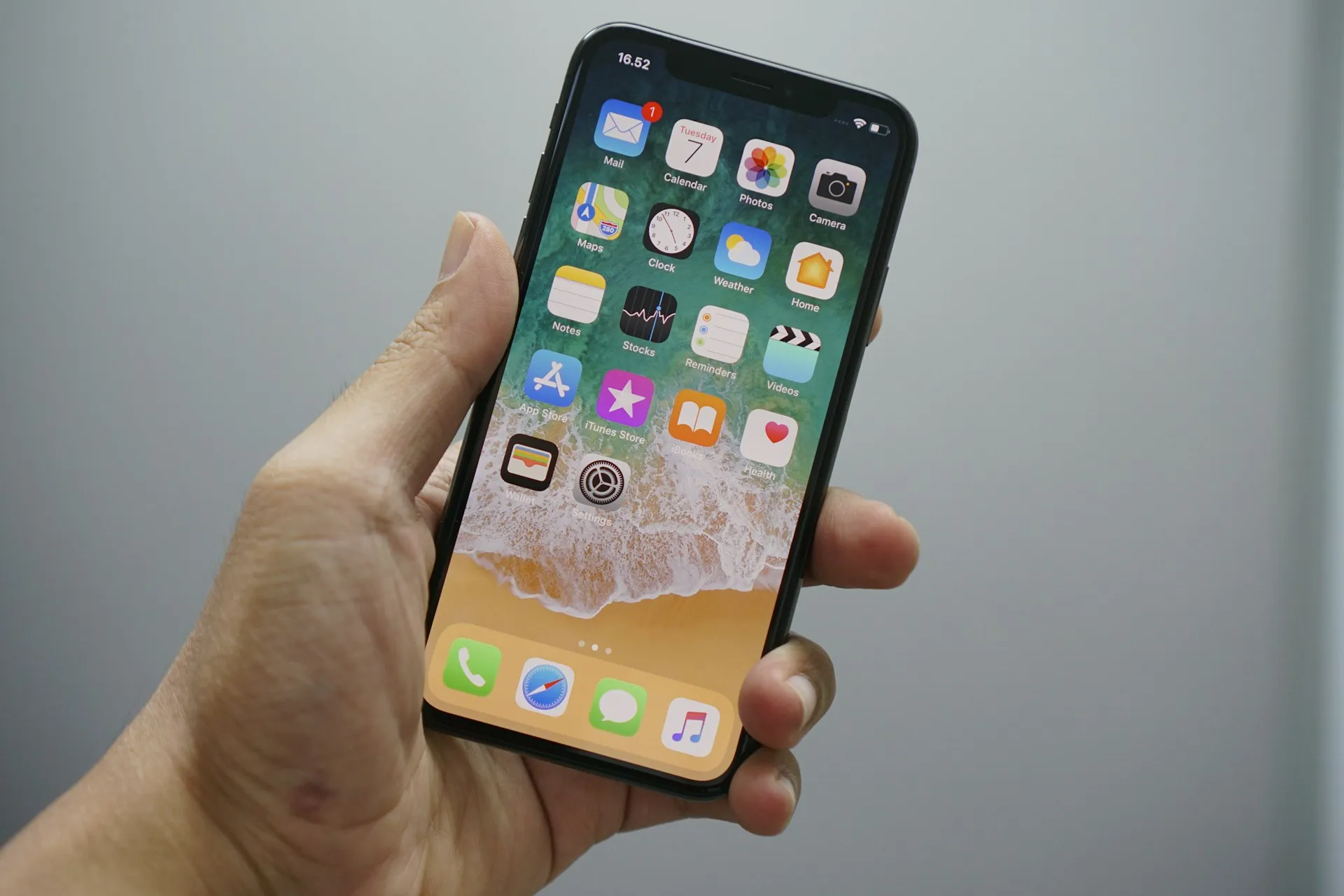
Most Americans moving to Nice or anywhere else on the French Riviera want the same two things from their phone. They want their US number to keep working, because that’s where the bank sends security codes and where family and old friends call, and they need a phone that works cheaply in France every day.
Those are two separate jobs, and trying to make one plan do both is how people end up quoted $110 a month by their US carrier. What works for most people is two numbers on one phone: your US number moved to a cheap US plan that mostly sits in the background, and a French number for daily life, both running side by side on the same iPhone.
The short version: what we’d do
Before you fly (these steps only work from the US):
- Switch your bank’s security codes to its app or to an authenticator app, wherever your bank allows it. This matters most, because it stops your money depending on text messages reaching you abroad.
- Move your US number to Tello’s $5 plan and turn on Wi-Fi calling. It’s the easiest cheap option, with one small risk in its terms, explained below. If your US number is mainly for family and friends, Google Voice ($20 once) is the alternative.
- Skip your carrier’s international pass. AT&T’s costs up to $120 a month on top of your normal plan.
After you land:
- Add a French number as a second line on the same phone. The easiest start is a prepaid French eSIM from Lycamobile, €6.99 a month, registered with your passport.
The full step-by-step checklist is at the end of this guide, and each step is explained in the sections below.
One iPhone, two phone numbers: what an eSIM is
A SIM is the thing that tells your phone which phone number it is and which company to bill. It used to be a small plastic card in a tray on the side of the phone. An eSIM does the same job, but it’s built into the phone and you add it by scanning a QR code or tapping through a setup screen in a carrier’s app, so there’s no card to cut or lose.
Three facts about iPhones make the two-number setup possible:
- iPhones sold in the US since the iPhone 14 have no SIM tray at all. They only take eSIMs. Apple lists every US model from the iPhone 14 through the iPhone 18 Pro as eSIM-only, so if you bought your phone in the US recently, eSIM is your only option anyway.
- One iPhone can store eight or more eSIMs and use two of them at the same time. Apple calls this Dual SIM. Both numbers can make and receive calls, texts and iMessages.
- You choose which number does what. You can use the French line for mobile data, keep iMessage and FaceTime on your US number so family sees the same contact as always, and pick which number to call from each time.
On an iPhone, all of this lives in Settings, then Cellular. Each line appears there under its own name, and Apple lets you rename them, so “US” and “France” is a good idea. If you’re shown the labels “Primary” and “Secondary,” those are only defaults; you can change them later.
Your phone has to be unlocked, meaning it isn’t tied to one carrier. A phone bought outright from Apple is unlocked. If you bought it through AT&T, Verizon or T-Mobile on a payment plan, ask the carrier to unlock it before you go.
Android phones from Google, Samsung and others handle two numbers the same way, though the menus vary by brand.
Where to move your US number: Tello’s $5 plan is the easiest
Tello has a page aimed at exactly this situation. You keep your number on its $5 plan (300 minutes, unlimited texts, no data), and in France you use Wi-Fi calling. That means the phone sends calls and texts for your US number over the internet whenever you’re on Wi-Fi, at home or in a café. According to Tello, calls over Wi-Fi from abroad are charged “the same as if you were in the US,” with no extra fee, and you “can receive One-Time Passwords (OTPs) and verification texts from your bank” this way.
People calling you still dial your US number and pay nothing extra, so they don’t even need to know you’ve moved.
If you choose Tello, three details matter:
- Set it up in the US. Tello’s terms say its eSIMs “may only be activated by individuals who are physically located within the United States.” Moving your number over after you land isn’t an option.
- Keep paying. Put the plan on automatic payment with a US card. If a number lapses, Tello can give it to someone else and you won’t get it back.
- Don’t turn on Tello’s roaming. You don’t need it for Wi-Fi calling.
The catch in Tello’s terms
Tello’s general terms say the service is for people located in the US unless the website says otherwise, and its roaming section says you “must reside in the U.S.” The abroad page and the terms don’t fully agree, and a carrier can enforce its terms whenever it likes. Treat Tello as the cheapest workable option with a small, real risk attached, and don’t make it the only way your bank can reach you (see the bank section below).
Two smaller catches. Picture messages don’t work over Wi-Fi, and Tello warns that a text containing a link turns into a picture message, which needs mobile data the $5 plan doesn’t have, so it’s worth asking your bank whether its codes ever come with a link.
Google Voice, if your US number is mainly for family
Google Voice turns your number into an internet number that works in an app on any phone or computer. Moving your existing mobile number there costs $20 once and nothing after that, and your old carrier cancels your service automatically when the move completes.
The downside is banks. Some won’t send security codes to internet numbers at all (see the bank section below), and Google Voice users regularly report codes from five- or six-digit “short code” numbers never arriving. Google also “may reclaim” a number that hasn’t made a call or sent a text for three months, so use it now and then.
The other options, and why we’d pass
Almost every cheap US carrier says in its terms that you’re supposed to live in the US. That’s the fine print nobody mentions in expat forums, so here it is plainly:
| Option | Lowest cost | Living abroad, per its terms | Bank texts? |
|---|---|---|---|
| Tello | $5/month, no data | Markets it, but terms say you “must reside in the U.S.” | Yes, over Wi-Fi |
| Mint Mobile | Paid upfront for months at a time | Bans use “while residing outside the U.S.” | Line can be cut off |
| US Mobile | Varies by plan | Can suspend lines used mainly abroad | Line can be cut off |
| Google Fi | Varies by plan | Warns after about 50 days abroad, cuts international data 30 days later | Yes |
| Google Voice | $20 once | Allowed; number reclaimed after 3 months unused | Often refused |
| NumberBarn | $2.99/month | Built for parking numbers | Often refused |
NumberBarn charges extra to receive texts.
Why not just pay AT&T or Verizon for roaming?
It’s the first quote most people get, and the worst deal for someone living abroad. AT&T’s consumer International Day Pass (Verizon and T-Mobile sell similar ones) costs $12 a day on top of your normal plan, capped at 10 daily fees per bill, so up to $120 a month. The “$110 a month” figure that gets passed around expat groups is AT&T Business Passport, which is only available on business lines.
These are built for a two-week vacation. For someone living in France, $120 a month is several times what a French plan costs, and you’d still be paying your full US plan underneath.
Will your US bank still send security codes to France?
This is the question that decides which option suits you, so ask it before you choose.
Some banks refuse internet-based numbers outright. Wells Fargo’s own help page says it “does not currently support text messages to landline or VoIP phones,” and VoIP (voice over internet) is the category Google Voice and NumberBarn fall into. The same page says Wells Fargo can text a US mobile number abroad, which is what a Tello line is.
The safer fix is to stop depending on text messages. Many US banks and brokers offer a push approval in their own app or an authenticator app (such as Google Authenticator or Microsoft Authenticator) that generates codes on your phone with no text message involved. Fidelity, for one, supports both. Switch every account that allows it before you leave. Then the phone number becomes a backup rather than the only key to your money.
Do this while you can still receive texts reliably at your US number. Changing security settings from abroad, with a number that’s half working, is the version of this task nobody enjoys.
Getting your French phone number in Nice
For daily life you’ll want a French number. Calling a US number from a French phone is an international call, so the pharmacy, the plumber and the agency showing you apartments will all find a +33 number easier to call back, and it’s the number French banks and websites send their security codes to.
The catch is that most French monthly plans are paid by direct debit from a French bank account, and a US bank account won’t work. The easiest way around that also happens to be the cheapest: a prepaid French eSIM from Lycamobile, €6.99 a month for 60 GB with unlimited calls and texts in France, bought online with a card and registered with your passport within 30 days. It costs less than most monthly plans, so you can simply keep it, and its number is the one you’ll use to open a French bank account with an online bank like Revolut or Nickel.
Our guide to getting a French phone number without a French bank account walks through each step, including the other operators and what they ask for, and our guide to getting a bank account in France without a French address covers the bank side.
If you’d rather sign up in person
Free’s store at 23 avenue Jean Médecin in central Nice is open Monday to Saturday, 9:30am to 7pm, and a store advisor can set you up with an eSIM there (Free charges €10 for it). Bring your passport and a bank card. Free’s plans are paid by bank account or card, so ask in the store which one they need from you.
Using a French plan in Monaco
If you live in Beausoleil or Menton or work in Monaco, check this one. Monaco isn’t in the EU, but French operators now use the Monaco Telecom network, and Monaco’s government says most French plans include it at no extra cost. Orange and Sosh, for example, bill Monaco exactly like France. The switchover dates varied by operator and the details depend on your plan, so check yours. Our public transport guide covers the roaming trap that still catches phones from other EU countries.
Before your flight: a checklist for your US number
Do these in order, while you’re still in the US:
- Check your phone is unlocked. A phone bought from Apple is. A carrier phone may need unlocking by the carrier.
- Switch your bank and brokerage security codes to the bank’s own app or an authenticator app wherever possible.
- Decide where your US number is going: a cheap plan like Tello if your bank needs texts, or Google Voice if it’s mainly for family.
- Move your number and install the new eSIM before you fly. Don’t cancel your old carrier yourself; the move cancels it, and canceling first can lose the number.
- Make a test call and receive a test text on the new line.
- Turn on Wi-Fi calling for the US line in Settings, then Cellular, then the line’s name, then Wi-Fi Calling.
- Set up automatic payment with a US card so the line never lapses.
- Write down your US number’s account PIN and login somewhere safe. You’ll need them if anything goes wrong from abroad.
After you land, add your French number as the second line (a prepaid Lycamobile eSIM is the easiest start) and choose it for mobile data.
Frequently asked questions
Will people calling my US number pay international rates?
No. They’re dialing a US number, so it costs them what it always did. With Wi-Fi calling on, the call reaches you in France over the internet.
Can I keep iMessage and FaceTime on my US number?
Yes. With two lines on an iPhone, you choose which number iMessage and FaceTime use. Keeping them on your US number means friends and family see the same contact they always have.
What happens to my US number if I stop paying?
It can be lost for good, which is why automatic payment and the occasional call or text matter. Tello’s terms say an expired number “can not be retrieved” and may be given to another customer, and Google Voice reclaims numbers after three months with no calls or texts.
Do I need data on my US plan?
Not if you have a French plan, which is why a $5 plan with no data is enough: your French line provides the mobile data, and Wi-Fi calling for the US number works on any Wi-Fi network.
Can I use my French number on a trip back to the US?
Yes, and it’s often cheap, because several French plans include US data or sell it as a small add-on. A few examples from September 2026:
- RED by SFR sells an international add-on for €5 a month, with no commitment, which adds 20 GB of data in the US, Canada, Switzerland and Andorra, plus unlimited calls and texts from those countries.
- Free’s 5G+ plan (€19.99 a month) includes 35 GB a month in more than 115 destinations, the US among them.
- Sosh’s and B&You’s “Voyage” plans (€15.99 a month each) include 40 GB of data you can use in the US.
- Lycamobile sells US data passes: €9.99 for 3 GB over 7 days, or €19.99 for 10 GB over 14 days.
Answering calls usually still costs extra while you’re there (Sosh charges €0.55 a minute and RED €0.73), but your US line works as an ordinary US plan again once you’re back, so give family that number for the trip.
Can I get a French phone number without a French bank account?
Yes. A prepaid French eSIM from Lycamobile or Orange Travel needs only a card and your passport, and Lebara takes a bank card or PayPal. Most monthly plans want a European bank account, ideally a French one, and none will take direct debit from a US bank account.
Can I use a travel eSIM until I get a French plan?
Yes, for your first day or two. Most travel eSIMs, like Saily and Airalo, give you data only, with no French number, so they can’t receive the text codes French banks send. A prepaid French eSIM from Lycamobile costs less and gives you a French number, so move to that quickly.
Sources
- Apple, eSIM-only iPhone models
- Apple, using Dual SIM on iPhone
- Apple, about eSIM on iPhone
- AT&T, International Day Pass
- AT&T Business, AT&T Business Passport
- Tello, keep your US phone number while abroad
- Tello, terms and conditions
- Mint Mobile, plan terms and conditions
- Mint Mobile, acceptable use policy
- US Mobile, international service terms
- Google Fi, using Fi outside the US
- Google Voice, port your mobile number
- Google Voice, texting limits
- Google Voice, inactive numbers
- NumberBarn, pricing
- Wells Fargo, text message FAQs
- Fidelity, how two-factor authentication works
- Lycamobile, eSIM prépayée
- RED by SFR, international option
- SFR, brochure tarifaire (September 2026)
- Free Mobile, fiche forfait Free 5G+
- Sosh, fiche tarifaire (August 2026)
- Bouygues Telecom, B&You plans
- Lycamobile, roaming rates
- Lycamobile, récapitulatif contractuel des forfaits prépayés (September 2026)
- Saily, what is a Saily phone number?
- Airalo, are eSIMs attached to phone numbers?
- Free, boutique Nice Jean Médecin
- RED by SFR, forfaits mobiles
- RED by SFR, nouveau client forfait mobile
- RED by SFR, moyens de paiement
- Lebara, forfaits mensuels sans engagement
- MonServicePublic Monaco, unified mobile network FAQ
- Orange, le réseau à Monaco