
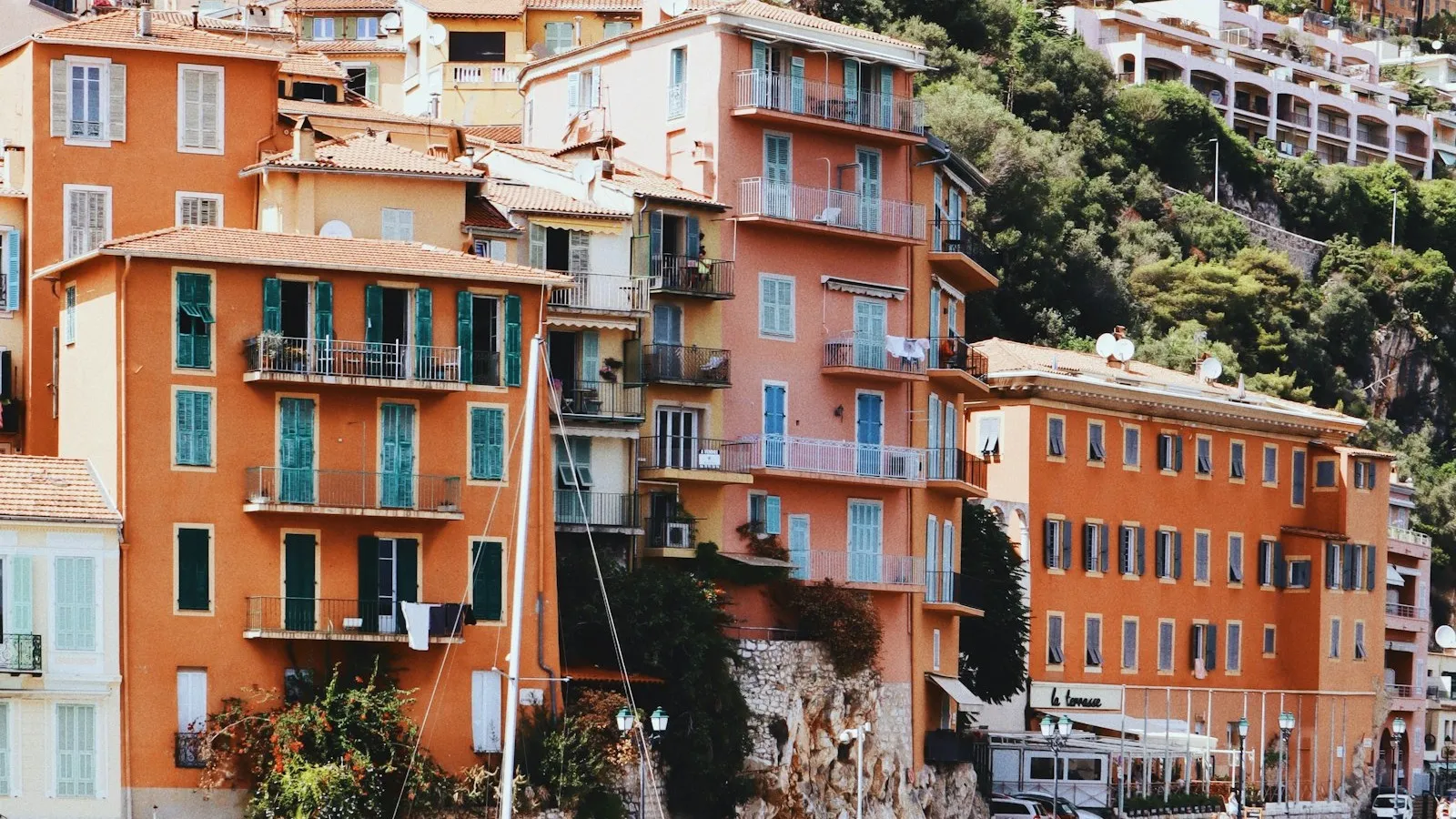
Buying property in France is a process unlike most other countries. The legal steps are fixed by law, the timelines are longer than you might expect, and the costs are higher than the headline price suggests, so here’s what to know before you start.
The notaire does the legal work
In France, property transactions are handled by a notaire (a state-appointed public official, not a private lawyer). Both buyer and seller can use the same notaire, or each can appoint their own. Either way, the fees are fixed by law and split the same way, so there’s no benefit to sharing one beyond convenience.
Your notaire will run the title search, check for outstanding mortgages or charges on the property, and handle the funds transfer, but they’re not there to advise on whether it’s a good purchase.
The two property purchase contracts: compromis and acte
Compromis de vente: The first binding contract, signed by both parties after your offer is accepted. At this point you pay a deposit (typically 10%). The buyer has a 10-day cooling-off period to withdraw without penalty; the seller does not. After those 10 days, withdrawal by either party triggers financial penalties.
Acte authentique de vente: The final deed, signed in the notaire’s office. This is when ownership transfers and the balance is paid, usually 2 to 4 months after the compromis.
The mandatory diagnostic reports (the DDT)
Before a property can legally be sold, the seller has to provide a full technical diagnostic file, the dossier de diagnostic technique (DDT), no later than when the compromis is signed. It’s a legal requirement, not an optional extra, and the seller pays for it, not you.
The file typically includes:
- DPE (energy performance): energy use and emissions, valid 10 years
- Lead report (CREP): required for anything built before 1 January 1949
- Asbestos report: required for anything with a building permit issued before 1 July 1997
- Termite report: required only in officially designated risk zones, valid 6 months
- Electrical and gas installation reports: required if the installation is more than 15 years old, valid 3 years each
- Natural and technological risk report (ERP): flood, earthquake, and industrial-hazard exposure for that specific address
- Non-collective sanitation report: only relevant if the property isn’t connected to mains drainage, valid 3 years
You don’t need to arrange any of this yourself, but it’s worth actually reading the file rather than treating it as paperwork to skim. A weak DPE score or a positive asbestos or lead result won’t stop a sale, but it’s exactly the kind of thing to factor into your offer, and in the case of lead or asbestos, into your renovation budget.
What the fees actually cost
The French call them “notaire fees” but they’re mostly taxes. On an older property (more than 5 years old), expect around 7 to 8% of the purchase price on top, dropping to around 2 to 3% on new-build properties.
So on a €500,000 older apartment, budget roughly €535,000 to €540,000 all-in before any agent commission.
Estate agent commissions and how they’re structured
In France, the commission is often included in the listed price (called “frais d’agence inclus” or FAI). Always check whether the price you’re negotiating from is net vendeur (what the seller gets) or FAI (inclusive of the agent’s cut), since the distinction changes what you’re actually negotiating.
Getting a French mortgage as a foreign buyer
French banks will lend to non-residents, but criteria are stricter and paperwork heavier. You’ll typically need 3 months of payslips or 2 to 3 years of accounts, proof of other assets, and a French bank account. Mortgage approval can add 6 to 8 weeks to the timeline. A broker is worth considering for a non-resident file, since they know which banks are currently lending to your nationality and on what terms: the directory covers English-speaking mortgage brokers, accountants and tax advisers.
If you’re buying without a mortgage, your offer should state this clearly: it makes you more attractive to sellers.
Property taxes after you buy in France
Owning French property means two annual taxes: taxe foncière (paid by the owner) and, if you live there, taxe d’habitation (being phased out for primary residences). Non-residents renting the property out will owe income tax in France on the rental income, regardless of where they live.
Capital gains tax applies when you sell. After 22 years of ownership, gains are exempt from income tax, and after 30 years they’re exempt from social charges too.
Wealth tax if you’re buying at the higher end
France has a real estate wealth tax, l’impôt sur la fortune immobilière (IFI), and the Côte d’Azur’s prices mean it’s worth knowing about even if you’d never think of yourself as needing to worry about wealth tax back home. It applies once your net French real estate holdings pass €1.3 million, calculated after debts like an outstanding mortgage are deducted.
The reassuring part for non-residents: you’re only assessed on property actually situated in France, not your worldwide assets. A non-resident who owns a €2 million villa in Cap d’Antibes and a house back home only declares the French property. Rates are progressive, starting at 0.5% just above the threshold and rising to 1.5% on the portion above €10 million. It’s a real annual cost to budget for on a premium purchase, not a one-off.
Check how easy the property actually is to reach
It’s easy to fall for a property during a viewing and only notice the commute problem afterward. If you’re going to be flying in and out regularly, whether for work, visits home, or hosting guests, check the realistic journey to Nice Airport before you commit, not just the distance on a map. A flat behind Vieux-Nice and a villa in the hills above Grasse can both be “20 minutes from the airport” on paper and an hour apart in practice once traffic, parking, or a lack of direct public transport gets factored in. See the guide to getting to and from Nice Airport for what your options actually look like from each part of the region.
Finding the right professionals for a French property purchase
The buying process is straightforward if you have good people around you. A bilingual estate agent who knows the local market, a notaire or property lawyer you can communicate with, and an independent financial adviser who understands cross-border taxation are the three most useful professionals to have in place before you make an offer.
If you’re planning to rent the property out, read the guide to renting out property in Nice before you exchange, since the regulatory picture has changed significantly since 2024.
Frequently asked questions
Can I buy property in France if I’m not a resident, and does buying get me residency?
Yes to the first, no to the second, and the gap between those two answers matters. France doesn’t restrict property purchase by nationality or residence status, and you don’t need a visa or a permit to own a home here. What owning one doesn’t do is give you any right to live in it full time. None of the French residence permit categories is based on property ownership, so a non-EU owner is still held to 90 days in any 180 unless they hold a long-stay visa obtained on separate grounds. If the plan is to move rather than visit, read the guide to getting a titre de séjour before you buy, not after.
What happens if my mortgage is refused after I’ve signed the compromis?
You get your deposit back in full. Where a purchase is being financed by a loan, the law requires the contract to include a condition suspensive d’obtention de prêt (a clause making the sale conditional on your mortgage being approved), and it can’t be written for less than a month, though 45 to 60 days is more typical. If the loan is refused inside that window you withdraw without penalty and every sum you paid at signature is returned. The clause only protects you if you actually apply on the terms the contract sets out, so don’t shop for a bigger loan than the one specified and then rely on the refusal.
How long does buying a property in France take from offer to keys?
Budget three to four months for a straightforward cash purchase. The compromis follows the accepted offer fairly quickly, then there’s a 10-day cooling-off period for the buyer, and the gap between compromis and the final acte usually runs two to four months while searches and the commune’s pre-emption window run their course. A mortgage adds roughly six to eight weeks on top, and a non-resident file tends to sit at the slower end of that. Anyone working to a fixed date, a school term or a lease ending, should count backwards generously.
Is the diagnostic file the same as a survey?
No. The dossier de diagnostic technique is a set of specific regulated checks the seller must supply: energy performance, lead, asbestos, termites in designated zones, electrical and gas installations, natural risk exposure. None of it is a structural assessment of the building. There’s no French equivalent of the British homebuyer’s survey built into the process, and neither the agent nor the notaire will commission one for you. If you want the roof, walls, or damp assessed, hire a surveyor or a builder yourself and do it before the cooling-off period expires.
Can I pull out after signing the compromis?
Within the first 10 days, yes, without giving a reason and without penalty. That right belongs to the buyer alone; the seller is committed from signature. After the 10 days you can still withdraw if one of the conditions suspensives fails, a refused mortgage being the common one. Walking away for any other reason after that point normally costs you the deposit, which is usually 10% of the price.
Official sources for buying property on the Côte d’Azur
- Notaires de France — Understanding notary fees
- Notaires de France — The buyer’s withdrawal period for a compromis de vente
- impots.gouv.fr — Real estate capital gains tax
- Ministère de la Transition écologique — Diagnostics techniques immobiliers
- impots.gouv.fr — IFI for non-residents with property in France
- Condition suspensive d’obtention de prêt — Service-Public.gouv.fr