
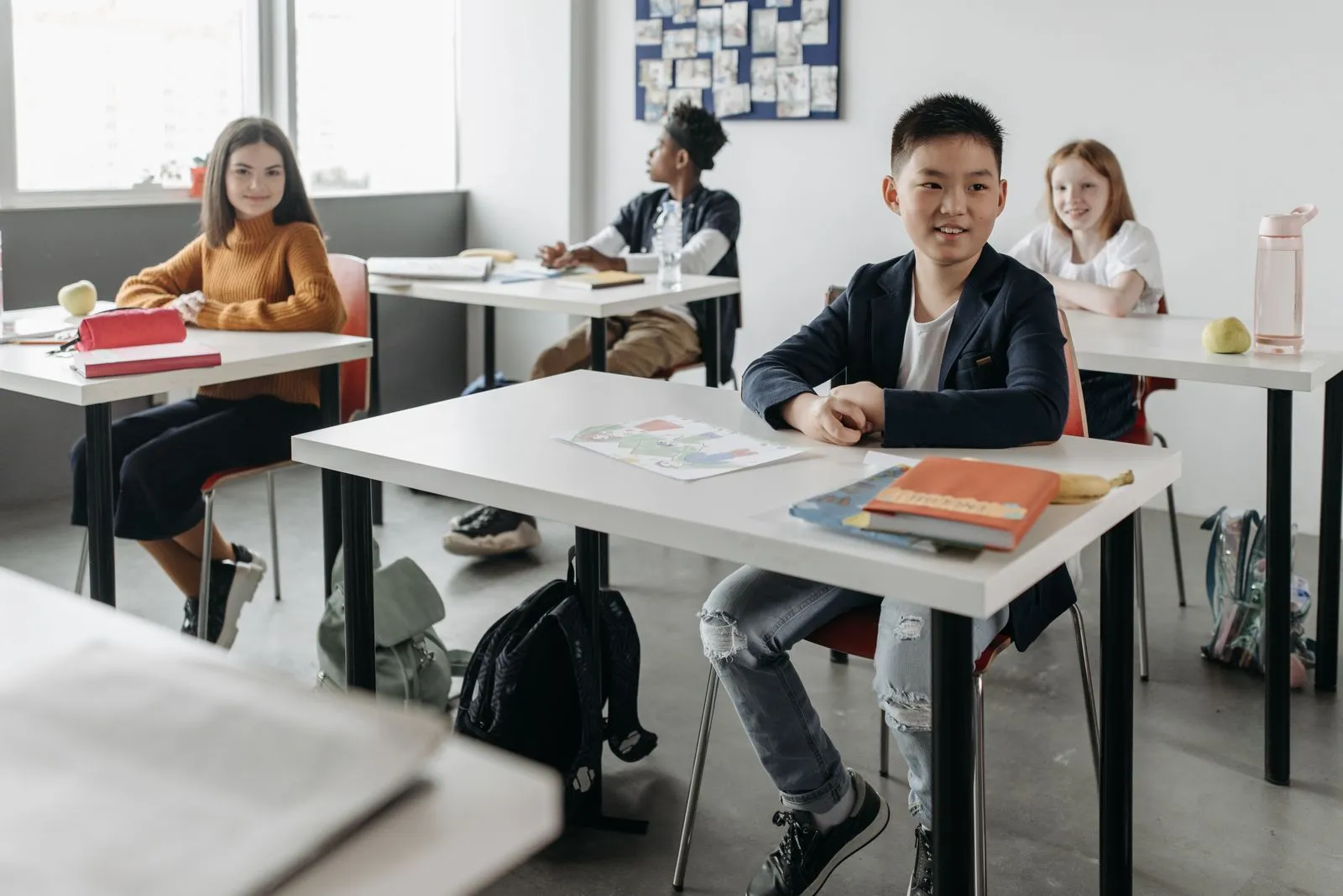
Nice and the Côte d’Azur have more international, private and bilingual schooling options than most expat families realise. Fourteen international schools are listed across the region, and that count doesn’t include bilingual French schools, the public international track, or the growing number of smaller private institutions. The hard part isn’t finding options. It’s figuring out which kind of school actually fits your family: English-medium, bilingual, or a selective public international section.
The schools divide broadly into two clusters: a handful located inside Nice itself, and a larger concentration around Sophia Antipolis and Valbonne, about 25 kilometres west. The Sophia Antipolis tech park has drawn multinational companies and international employees since the 1970s, and the density of international and private schools in that area is a direct result. Many families relocating for work at Sophia Antipolis use these schools. Both clusters are within reach of most of the region’s main residential areas, and most schools run dedicated bus services into Nice, Cannes, and Antibes.
| School | Location | Ages | Curriculum | Language |
|---|---|---|---|---|
| École Montessori Internationale | Nice | 20 months–12 | Montessori bilingual | Bilingual |
| EIB Nice | Nice | 2–11 | French/English bilingual | Bilingual |
| International School of Nice (ISN) | Nice | 3–18 | IB (PYP, MYP, Diploma), IGCSEs | English |
| ABC School International | Nice | 3–18 | French NC + Cambridge International | Bilingual |
| Collège-Lycée Lafayette | Nice | 11–18 | French NC + English immersion | Bilingual |
| ICS Côte d’Azur | Valbonne | 2–11 | IB Primary Years Programme | Bilingual |
| The Hive Academy | Valbonne | 11–18 | American curriculum, AP exams | English |
| Centre International de Valbonne | Valbonne | 11–18 | French bac + international sections | French (state school) |
| Mougins British International School | Mougins | 3–18 | English National Curriculum, IGCSEs, A-Levels | English |
| Mouratoglou International School | Biot | 10–18 | French + American curricula | Bilingual |
| EIB Cagnes-sur-Mer | Cagnes-sur-Mer | 2–11 | French/English bilingual | Bilingual |
| EIB Pégomas | Pégomas | 2–11 | French/English bilingual | Bilingual |
Private school fees across the region run roughly €10,000 to €20,000 per year. EIB schools tend to be at the lower end of that range. CIV is a state school and costs significantly less (see the fees section below for more detail).
International and bilingual schools in Nice
International School of Nice (ISN) is the most established private English-language school inside the city. It takes students from age 3 through to 18 and runs the full IB pathway: the Primary Years Programme, the Middle Years Programme, and the IB Diploma at sixth form level, alongside IGCSEs. Instruction is in English, with daily French classes throughout. The school has been running for over 45 years, draws students from more than 65 nationalities, and is part of the Globeducate group, which also operates Mougins British International School and ICS Côte d’Azur. Website: isn-nice.com
ABC School International is a private bilingual school near the city centre, taking children from age 3 through to 18. It follows the French national curriculum alongside British elements, with Cambridge International exams for older students. Teaching time is split roughly equally between English and French. It’s a smaller school than ISN with a more local intake, and tends to suit families who want French-language integration alongside a structured English stream. Website: abc-school-international.com
École Internationale Bilingue (EIB) de Nice is a primary-only school taking children from age 2 to 11. It’s part of a small network of EIB schools across the region (see below), and runs from 7:30am to 6:30pm including school holidays, which matters for working parents. The curriculum aligns with both French and British educational milestones, delivered 50/50 in each language. Website: eibnice.fr
École Montessori Internationale de Nice is the youngest school on this list, founded in 2021. It takes children from around 20 months to 12 years and uses the traditional Montessori method in a bilingual setting, with English and French used throughout. The AMI-certified head makes it a credible option for families committed to the Montessori approach. Website: emi-nice.com
Collège-Lycée Lafayette fills a gap that the other Nice schools leave: a bilingual secondary option for families who don’t want to cross into the Sophia Antipolis area. It covers middle and high school following the French national curriculum structure, with deep English immersion throughout. It doesn’t run the IB or Cambridge programmes (for those, ISN is the only in-city option), but if you want intensive bilingual secondary education inside Nice, this is the main alternative. If your child is past primary age and you need something within the city, this is often the first port of call. Website: collegelyceelafayette.com
International schools near Sophia Antipolis and Valbonne
The concentration of private international schools in the tech park and surrounding towns is the legacy of Sophia Antipolis attracting multinational companies from the 1970s onwards, and most schools in this area run bus routes into Nice.
Mougins British International School is the region’s strictest British curriculum school, taking students from age 3 to 18 through the English National Curriculum, IGCSEs, and A-Levels. It’s been running since 1964. If your priority is continuity with a UK education, this is the most direct equivalent. The campus is near Mougins, about 25 to 30 minutes from Nice depending on traffic. Website: mougins.britishinternationalschool.com
ICS Côte d’Azur (International Bilingual School of Côte d’Azur) is a primary school in Valbonne for ages 2 to 11, offering the IB Primary Years Programme in a French-English bilingual setting. It’s part of the Globeducate group. It’s well regarded for the early years and works well as a feeder into ISN or Mougins for older children. Website: icscotedazur.com
The Hive Academy covers grades 6 through 12 with an American curriculum and operates as a College Board AP Test Center. Class sizes are capped at 14 students, and it positions itself as a more intimate alternative to the larger international schools. For families coming from the US or with children who’ve already started an American curriculum, this is worth looking at. Website: thehiveacademy.com
Mouratoglou International School in Biot is a different proposition from the others on this list. Built alongside the Mouratoglou Tennis Academy, it combines an academic programme (French and American curricula tracks) with a structured afternoon schedule. It runs from Grade 5 through 12 (ages 10 to 18). The sport-focused “Sport & Passion” track suits serious young athletes, but there’s also a “Next Gen” stream for students focused on academics and tech rather than competitive sport. Either way, the environment is high-energy and athletic, which won’t suit every family. Website: mouratoglou-school.com
The public route: Centre International de Valbonne
The Centre International de Valbonne is the state school on this list, and it’s worth treating separately because the fee structure is fundamentally different. As a public school with competitive international sections (including an American section, English-medium despite the name), tuition is a fraction of what private international schools charge. Students taking the American section sit the Baccalauréat Français International (BFI) rather than the standard bac, following an internationally oriented stream with strong English and additional languages.
The catch is selectivity. Places in the international sections are in demand, and entry isn’t guaranteed. Families who find out early, apply properly, and whose children have a solid academic record tend to get in. CIV isn’t the only public option either: several other state schools across the region run their own English-language sections internationales [international sections], including one inside Nice itself. See the full guide to public schools with English sections for the complete list. Website: civfrance.com
The EIB network
EIB (École Internationale Bilingue) schools follow the same 50/50 French-English curriculum model across three campuses in the region: Nice (Le Pain d’Épice), Cagnes-sur-Mer (Le Pain de Sucre), and Pégomas. They take children from age 2 to 11. If you’re living between Nice and Cannes, the Cagnes campus is often the more practical choice. All three share the same approach and quality standards, so the decision usually comes down to geography.
What does IB mean, and which schools offer the IB Diploma?
IB stands for the International Baccalaureate, a curriculum framework taught in more than 150 countries. It runs across three stages: the Primary Years Programme (PYP) for younger children, the Middle Years Programme (MYP) for early secondary, and the IB Diploma Programme (DP) for the final two years of secondary school, typically ages 16 to 18. The Diploma is what most people mean when they ask about “IB schools”: a two-year, exam-based qualification recognised by universities in the UK, US, and continental Europe.
International School of Nice (ISN) runs the full IB pathway, from the Primary Years Programme through to the Diploma, making it the region’s main option for families who want IB continuity from primary through to university entry.
ICS Côte d’Azur in Valbonne runs the IB Primary Years Programme for children aged 2 to 11, and works well as an early feeder into ISN or another secondary IB school for older children.
Which international school fits your family?
There’s no single best school on the Côte d’Azur. The right one depends on how long you expect to stay in France, how much French immersion you want, and which curriculum your child needs to carry forward if you move again.
Children who go through the IB Diploma have a globally recognised qualification that works in most university systems. A-Level students do well in the UK and are accepted by many international universities, but it’s a narrower track. US high school diplomas with AP exams are well understood in North America but need more explanation in Europe. French baccalauréat holders are well positioned within the French system and in Europe generally.
For primary-age children the curriculum question matters less. What matters more is language of instruction and whether the daily French content is enough to integrate socially. A child who spends five years in a school where French is half the day will leave with real working French. A child in a fully English environment may not, depending on what happens outside school.
If you’re uncertain how long you’ll stay in France, a fully English-medium school is the lower-risk option, since it keeps options open and doesn’t require the child to catch up academically if you move back.
Visiting a school before you decide
Every school on this list will show you round, and none of them expect you to choose from a website. Visiting is the part that changes minds: two schools with near-identical curriculum tables can feel completely different once you have stood in a corridor at break time.
Open days cluster in the autumn and again in January and February, ahead of the main admissions round. Most schools publish dates a term ahead. If you have missed one, ask anyway. Private schools on the Côte d’Azur are used to families arriving mid-year and will almost always arrange an individual tour instead, often at short notice.
Visiting from abroad is normal here and worth saying out loud, because a lot of families book a single trip and try to see everything in it. Cluster your visits geographically: the Nice schools in one day, the Sophia Antipolis and Valbonne group in another, since they sit about 25 kilometres apart. Ask for the tour to run during teaching hours rather than in the holidays, and ask to see the year group your child would actually join.
Worth asking on the day: how many nationalities are in the class, how much of the day is genuinely in French, what happens if your child arrives with no French at all, what the school does about the gap between the French and English academic calendars, and how long the waiting list is for the year you need (that last one decides more admissions than anything on the curriculum page).
Applying to international schools: fees, timelines, and language support
Apply early. Popular schools fill their younger year groups well in advance. For September entry, most schools start accepting applications in the autumn of the previous year, and some, particularly ISN and Mougins, have waitlists for certain year groups.
School buses. Most schools in the Valbonne and Sophia Antipolis area run dedicated bus services with stops across Nice, Cannes, and Antibes. It’s worth asking each school for their current route list before ruling somewhere out on distance.
Fees. Private international school fees across the region typically run from around €10,000 to €20,000 per year, varying by school and year group. Some schools charge registration fees, capital levies, and activity fees on top. The EIB schools tend to be at the lower end of the private range, while CIV is significantly cheaper as a public school.
Language support. Most schools offer some form of EAL (English as an Additional Language) or FLS (French as a Second Language) support for children joining without the language. It’s worth asking specifically what’s available and how long it typically takes children without French to integrate.
Nursery and primary are easier than secondary. A child joining at nursery or early primary adapts quickly regardless of previous language experience. Joining at secondary level in a bilingual school with no French is harder, though most secondary-age children going into a fully English school adapt fine at any point.
Frequently asked questions
Is there a free English-speaking school option in Nice?
Yes, as of the 2025-2026 school year. Collège Antoine Risso opened Nice’s first British international section, and it’s genuinely free, unlike most of the other public English sections in the region, which charge fees through the ASEICA parent association. The Centre International de Valbonne (fee-based) remains the longest-established option, 25 kilometres from Nice. Lycée Masséna, despite its reputation, doesn’t run an English section at all, only Arabic and Portuguese. All of these are selective, with entry through an English and French entrance exam rather than open enrolment. See the full guide to public schools with English sections for the complete list, including primary-level options and which schools are free versus fee-based.
Do I need to speak French to enrol my child?
At most international schools, no. The admissions process and day-to-day parent communication at ISN, Mougins, ICS, and The Hive Academy all run in English. At bilingual schools including the EIBs and ABC, French is used alongside English at school but parents are generally accommodated in English for administrative matters.
What’s the difference between bilingual and international schools?
An international school uses English as the primary or only language of instruction and typically follows an internationally recognised curriculum (IB, British, or American). A bilingual school splits teaching time between two languages, usually 50/50 French and English, and may follow the French national curriculum with an English dimension layered on top. Bilingual schools tend to produce stronger French speakers but require more French from the start.
Can I visit an international school in Nice before applying?
Yes, and you should. Open days run mostly in autumn and again in January and February, but every school on this list will arrange an individual tour outside those dates, including at short notice for families arriving mid-year or visiting from abroad. Ask for a weekday during teaching hours and to see the year group your child would join.
Which schools follow the English or British curriculum?
Mougins British International School teaches the English National Curriculum through to IGCSEs and A-Levels. ABC School International in Nice runs Cambridge International alongside the French national curriculum. The Hive Academy in Valbonne follows an American curriculum with AP exams rather than a British one. International School of Nice teaches the IB, which is its own international framework rather than an English curriculum, though it is taught in English throughout.
What are the best international schools in Nice?
Depends what you need, and any list that answers this without asking is selling something. International School of Nice is the only full IB school inside the city and the default for families who want an English-medium education without leaving Nice. Mougins British is the strongest option for a British curriculum. Centre International de Valbonne is the best value by a distance if your child can pass its entrance exam. The comparison table above sets out curriculum, ages and language of instruction for all twelve so you can judge against your own situation.
Which schools in Nice offer the IB Diploma Programme?
International School of Nice (ISN) is the only school on this list running the full IB Diploma Programme through to graduation. ICS Côte d’Azur in Valbonne offers the earlier IB Primary Years Programme but not the Diploma itself.
What’s the difference between an international school and a private school in Nice?
In practice, most of the schools on this list are both: international schools on the Côte d’Azur are almost always privately run and privately funded. “International” describes the curriculum and language of instruction; “private” describes how the school is funded and governed, as opposed to the state (public) sector. The main non-private route is the Centre International de Valbonne and the public schools running English sections internationales, covered below.
At what age do children need to start school in France?
School is compulsory in France from age 3. Most international and bilingual schools accept children from age 2 for nursery. There’s no obligation to use a French state school. For the years before that, see our guide to bilingual childcare on the Côte d’Azur covering crèches and English-friendly nursery options.
Browse school profiles in the Riviera Locals directory: all schools on the Côte d’Azur · Nice · Valbonne · Mougins